COMMERCIAL · INDUSTRIAL · RESIDENTIAL

Epoxy Floor Coating on Vancouver Island

Topseal installs epoxy flooring systems for commercial properties, industrial facilities and residential concrete. Each project is built around the condition of the slab, expected traffic, exposure, cleaning requirements and desired finish.

Request a Free Quote
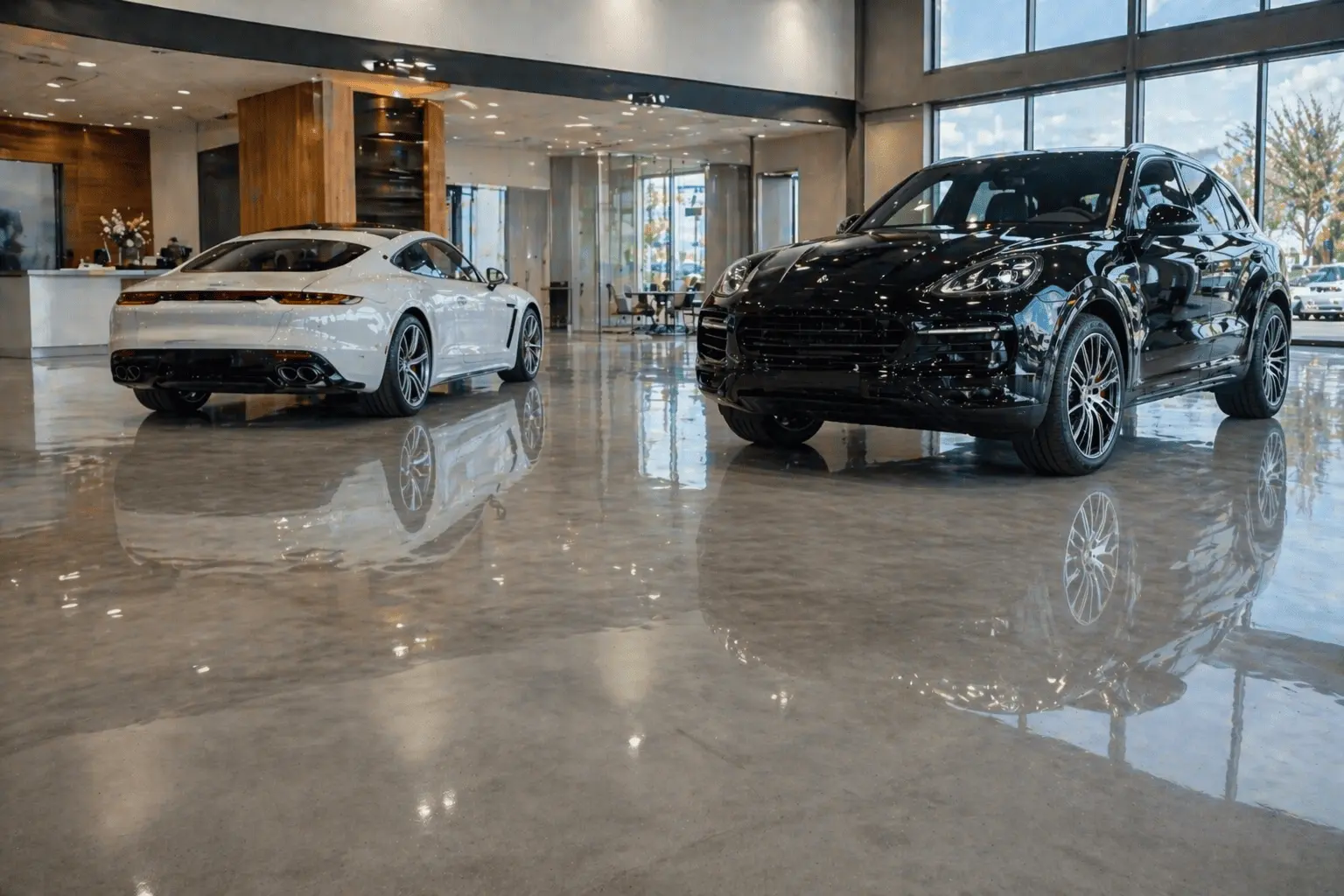
Car Dealership Commercial Concrete Floor
2013
Serving Vancouver Island Since
1,000+
Completed Projects
20+
Years of Experience
100%
Locally Owned and Operated

SERVICE OVERVIEW

What Is an Epoxy Floor Coating and Why Might It Be Needed?

Epoxy flooring is a resin-based system applied over mechanically prepared concrete. The resin and hardener are mixed during installation, beginning a chemical curing process that forms a bonded, seamless surface. Depending on the project, the complete system may include a primer, epoxy body coat, broadcast aggregate, decorative material and a compatible protective topcoat.

Property owners and facility operators often consider epoxy when unfinished or worn concrete is difficult to clean, produces dust, absorbs staining materials or no longer provides the appearance and performance the space requires. Epoxy can create a smooth or textured finish in solid colours, decorative flake blends, quartz broadcasts and other configurations.

The word “epoxy” does not describe one universal floor. System thickness, aggregate, texture, chemistry and topcoat must be selected for the actual traffic, chemicals, moisture, temperature, sunlight, cleaning procedures and return-to-service schedule. More demanding environments may require high-build epoxy, epoxy mortar, urethane cement, a chemical-resistant resin or another specialized system rather than a basic coating.

PROJECT CONSIDERATIONS

Epoxy Is a Flooring System—not Concrete Paint

A durable installation starts with evaluating the slab and creating the surface profile required by the selected system. Existing coatings, curing compounds, laitance, oil, weak concrete and other bond-inhibiting materials may need to be mechanically removed.

Cracks, damaged joints, spalls, uneven areas and moisture-vapour conditions should be reviewed before coating. Applying epoxy over an unsuitable or poorly prepared surface can contribute to peeling, blistering, delamination or cracks reflecting through the finish.

Topseal evaluates these conditions before recommending the preparation method, system build and finish.

PROBLEMS EPOXY FLOORING CAN ADDRESS

When an Epoxy Floor Coating May Be Considered

Epoxy flooring can improve the function and appearance of concrete, but the system must be matched to the problem rather than treated as a universal coating.

Porous or Dusting Concrete

Unfinished concrete can release surface dust and absorb oils, spills and staining materials. A properly specified epoxy system seals the working surface and can make routine cleaning more manageable.

Wear from Traffic and Equipment

Pedestrian traffic, carts, vehicles and equipment can wear exposed concrete or light-duty finishes. Coating thickness, aggregate and topcoat can be adjusted for the expected level of abrasion and use.

Staining and Routine Spills

A seamless resin surface can provide more time to clean common spills before they penetrate the concrete. Chemical resistance must still be checked against the actual substance, concentration, temperature and exposure time.

Difficult-to-Clean Surfaces

Cracked finishes, porous concrete and open joints can collect dirt and make maintenance harder. Epoxy can create a continuous, cleanable surface after necessary repairs and preparation are completed.

Slip and Visibility Requirements

Aggregate texture, colour zones, safety markings and line striping can be incorporated where the project requires greater traction or clearer separation of pedestrian, work and equipment areas.

Worn or Unattractive Finishes

A new flooring system can update a worn concrete surface with solid colour, decorative flake, quartz or other finishes. Existing coating failure must first be diagnosed so the same problem is not simply covered over.

WHERE EPOXY FLOORING CAN BE USED

Epoxy Flooring for Commercial, Industrial and Residential Concrete

The environment determines the system. A decorative commercial floor, a working industrial surface and a residential garage should not automatically receive the same build, texture or topcoat.

COMMERCIAL

Cleanable, Presentable Commercial Floors

Retail spaces, showrooms, dealerships, offices, service businesses and other customer-facing properties may need a floor that supports the appearance of the business while tolerating regular foot traffic and cleaning. Solid-colour epoxy, decorative flake and quartz systems offer different combinations of visual texture, traction and maintenance.

Back-of-house areas, corridors, storage rooms and commercial workspaces may prioritize durability and straightforward cleaning over decoration. The coating thickness and finish can be adjusted to suit the expected use instead of applying the same system throughout the property.

Commercial kitchens and other hot, wet or frequently washed environments require additional evaluation. Thermal change, grease, sanitation chemicals, drainage and slip resistance may make urethane cement or another specialized system more appropriate than standard epoxy.

Explore Commercial Industries →

View Commercial Services →

INDUSTRIAL

Systems Built Around Industrial Operations

Warehouses, production areas, maintenance shops, loading areas and light-manufacturing facilities may require epoxy flooring selected for vehicle traffic, equipment loads, abrasion, impact and routine chemical exposure. A thin coating may not provide the required build for these conditions.

High-build epoxy, broadcast systems and epoxy mortar can increase system thickness and mechanical performance. Urethane or polyaspartic topcoats may be incorporated when the specification calls for additional abrasion, chemical or ultraviolet resistance.

Every chemical exposure should be reviewed individually. Concentration, temperature, contact time and cleaning procedures affect compatibility. Facilities dealing with aggressive acids, solvents, thermal shock or continuous wet processing may require novolac, urethane cement, vinyl ester or another specialized flooring chemistry.

Explore Industrial Applications →

View Industrial Services →

RESIDENTIAL

Garages, Basements and Interior Concrete

Epoxy flooring can transform unfinished residential concrete into a sealed, more finished surface. Garages are a common application because the floor must deal with vehicles, road debris, storage, tools and regular cleaning. Decorative flake systems can help disguise minor visual wear while creating a consistent finish.

Basements, home gyms, workshops, offices and utility areas may use solid-colour, decorative or clear epoxy systems depending on the concrete and desired appearance. Moisture conditions must be evaluated, particularly for below-grade slabs.

Exterior patios, balconies, pool decks and driveways require products specifically intended for weather, ultraviolet exposure, movement and water. Standard interior epoxy should not be assumed to be the right exterior finish.

Explore Residential Applications →

View Residential Services →

PROFESSIONAL SYSTEMS & MANUFACTURER KNOWLEDGE

Professional-Grade Flooring and Waterproofing Systems

Topseal works with professional concrete repair, resin flooring and waterproofing systems selected according to the surface, environment and performance requirements of each project.

SOPREMA

PMMA waterproofing and seamless membrane systems for decks, balconies, parkades, plazas, ramps and other exposed concrete surfaces.

ARDEX

Professional concrete repair, moisture-control, floor-levelling, resurfacing and substrate-preparation systems.

Sika

Concrete repair, waterproofing, joint-sealing, resin-flooring and protective-coating systems for demanding environments.

Sherwin-Williams

High-performance resin flooring and protective coating systems designed for commercial and industrial concrete surfaces.

OUR INSTALLATION PROCESS

A Professional Floor Coating Starts With the Right Process

Every project begins with understanding the concrete, operating conditions and desired finish. From preparation through final inspection, Topseal follows a clear process designed around long-term coating performance.

01

Project Consultation

We discuss the space, existing surface, intended use, timing and the result you want to achieve.

02

Surface Assessment

The concrete is reviewed for damage, moisture, contamination, previous coatings and other relevant conditions.

03

System Recommendation

We recommend a preparation method and coating system suited to the surface and operating environment.

04

Preparation & Installation

The surface is prepared, required repairs are completed and the selected system is professionally installed.

05

Inspection & Handover

We review the completed work and explain cure time, return-to-service timing and ongoing care.

EPOXY FLOORING FAQ

Questions About Epoxy Floor Coatings

The right epoxy system and installation approach depend on the condition of the concrete and how the completed floor will be used.

What is an epoxy floor coating?

An epoxy floor coating is a resin-based system installed over prepared concrete. Its resin and hardener are mixed during installation and chemically cure into a bonded surface. A complete floor may include primer, epoxy coats, aggregate, decorative material and a compatible topcoat.

Is epoxy flooring the same as concrete paint?

No. A professional epoxy floor is a multi-component resin system designed to bond with properly prepared concrete. Its preparation requirements, thickness, curing process and performance differ from ordinary one-component concrete paint.

How is concrete prepared before epoxy is installed?

Preparation normally involves mechanical grinding or shot blasting to remove weak surface material and create the profile required by the selected system. Existing coatings, contaminants and dust must be removed, and cracks, joints or damaged areas may require separate repair.

Can epoxy be installed over an existing coating?

Sometimes, but only when the existing coating is sound, compatible and properly prepared. If it is peeling, poorly bonded, contaminated or incompatible, it may need to be removed. Covering a failed coating does not correct the cause of the failure.

Does concrete moisture affect epoxy flooring?

Yes. Moisture vapour moving through a slab can contribute to blistering, loss of adhesion or delamination in an unsuitable flooring system. The slab may require moisture testing and, when conditions warrant it, a compatible moisture-mitigation primer or another flooring approach.

Is epoxy flooring slippery?

A smooth resin floor can become slippery when wet. Broadcast aggregate or other texture can be added to increase traction. The texture must balance slip resistance with cleaning requirements because more aggressive profiles are generally harder to clean.

Is every epoxy floor resistant to chemicals?

No. Chemical resistance varies by product and system. The substance, concentration, temperature, exposure time and cleaning procedure should be compared with manufacturer data. Aggressive chemical environments may require novolac, urethane cement, vinyl ester or another specialized system.

Can epoxy flooring be used outdoors?

Standard epoxy is generally better suited to interior applications because sunlight can affect colour and appearance. Exterior concrete should use a system specifically selected for ultraviolet exposure, weather, water, movement and temperature changes.

How long does an epoxy floor last?

Service life depends on slab condition, preparation, system thickness, traffic, impact, chemicals, cleaning and maintenance. A light-duty coating used in a heavy industrial space will not perform like a system designed for that environment, so a fixed lifespan should not be promised before the project is assessed.

How long does epoxy flooring take to install?

The schedule depends on project size, repairs, preparation, number of coats, temperature and cure requirements. The floor must remain protected until the installed system reaches the required cure for foot traffic, vehicles, equipment or chemical exposure. Topseal reviews return-to-service timing during project planning.

Where does Topseal install epoxy flooring?

Topseal installs epoxy floor coating systems throughout Vancouver Island. Service areas include Victoria, Duncan, the Cowichan Valley, Nanaimo, Parksville, Qualicum Beach, the Oceanside Region, Courtenay, Comox, the Comox Valley and Campbell River.

RELATED SERVICES

Systems and Preparation Related to Epoxy Flooring

The right solution may use epoxy as one part of a larger system or may require a different chemistry when traffic, exposure, downtime or slab conditions demand it.

Polyaspartic & Polyurea Floor Coatings

Fast-curing systems and topcoats may be considered when return-to-service time, abrasion resistance or ultraviolet exposure is important.

Explore Service →

Epoxy Mortar & High-Build Flooring

Thicker resin-rich and aggregate-filled systems can provide greater mechanical performance for equipment traffic, impact, abrasion and damaged industrial concrete.

Explore Service →

Concrete Surface Preparation

Diamond grinding, shot blasting, coating removal and substrate evaluation establish the clean, sound and profiled concrete required by the flooring system.

Explore Service →

SERVING VANCOUVER ISLAND

Concrete Coating Services Across Vancouver Island

Topseal serves residential, commercial and industrial projects in communities throughout Vancouver Island.

REQUEST A PROJECT ASSESSMENT

Tell Us About Your Concrete Coating Project

Share a few details about the surface, location and intended use. Topseal will review your information and help determine the appropriate next step.

Prefer to speak with someone?

Call 250-248-7413

Serving residential, commercial and industrial projects across Vancouver Island.